
Is 107 a Prime Number? Yes, Here's Why
Yes, 107 is a prime number. Its only divisors are 1 and 107, meaning it cannot be evenly divided by any other whole number.
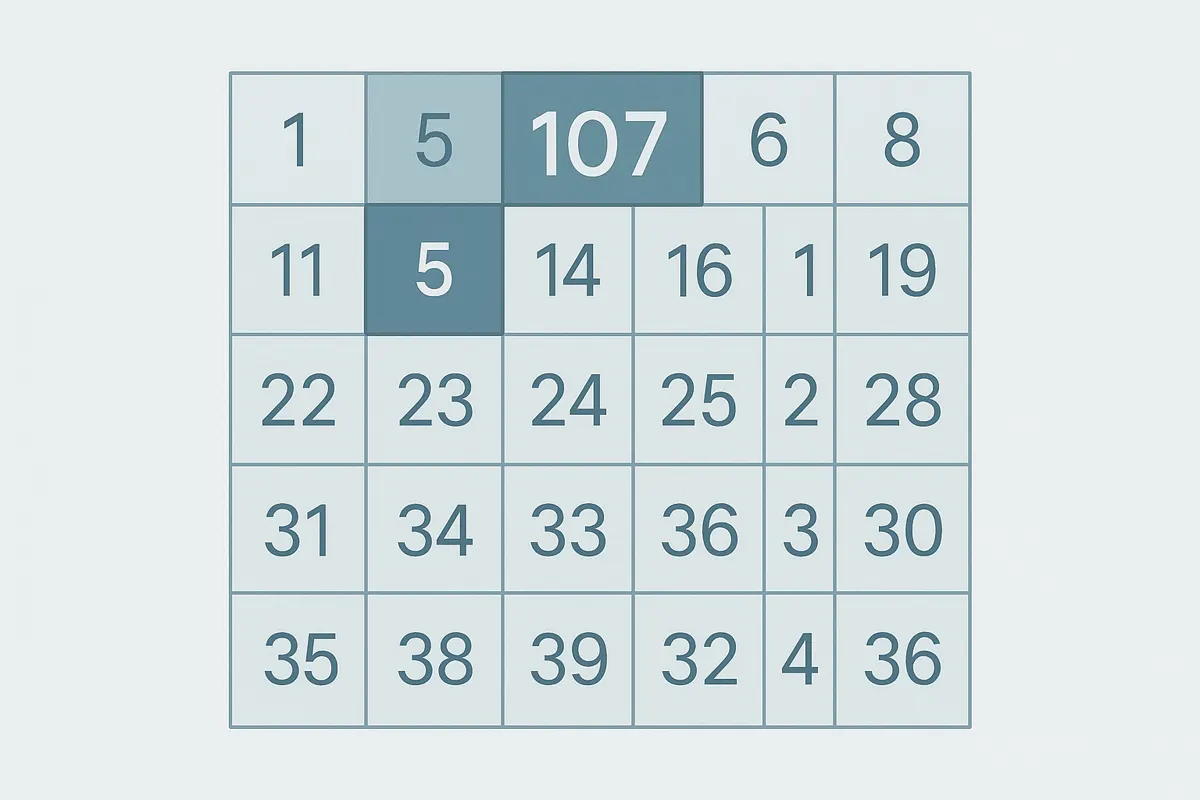
Why 107 Is a Prime Number
A prime number is defined as a number greater than 1 that has exactly two distinct positive divisors: 1 and itself. For 107, these divisors are only 1 and 107. No other whole number can divide 107 without leaving a remainder, confirming its status as a prime.
Factorization of 107
The factorization of 107 is straightforward: 1 × 10⁷. There are no other whole numbers that multiply together to make 107, so it cannot be broken down further into smaller factors.
What Makes 107 Special?
- 107 is a prime number, so it can only be divided evenly by 1 and itself.
- 107 and 109 form a twin-prime pair, meaning they are both prime and differ by just 2.
How to Spot Prime Numbers Faster
Recognizing primes like 107 quickly is a useful mental skill. You can sharpen this ability by practicing with games that challenge you to pick out primes against the clock, such as Prime 59. Regular practice can help you spot patterns and rule out non-primes faster.
Train your eye for primes the fun way - Prime 59 is a free, race-the-clock prime-spotting game.
Try Prime 59FAQ
Is 107 a prime number?
Yes, 107 is a prime number because its only divisors are 1 and 107.
What is the factorization of 107?
The only factorization of 107 is 1 × 10⁷.
Why is 107 considered prime?
107 is prime because it has exactly two divisors: 1 and itself. No other whole number divides it evenly.
Are 107 and 109 both prime?
Yes, both 107 and 109 are prime numbers. They are also a twin-prime pair.
How can I get better at spotting prime numbers like 107?
You can improve by practicing with games like Prime 59, which challenge you to identify prime numbers quickly.