
Is 121 a Prime Number? A Clear Answer with Factorization and Explanation
121 is not a prime number. It is a composite number because it can be factored as 11 × 11.
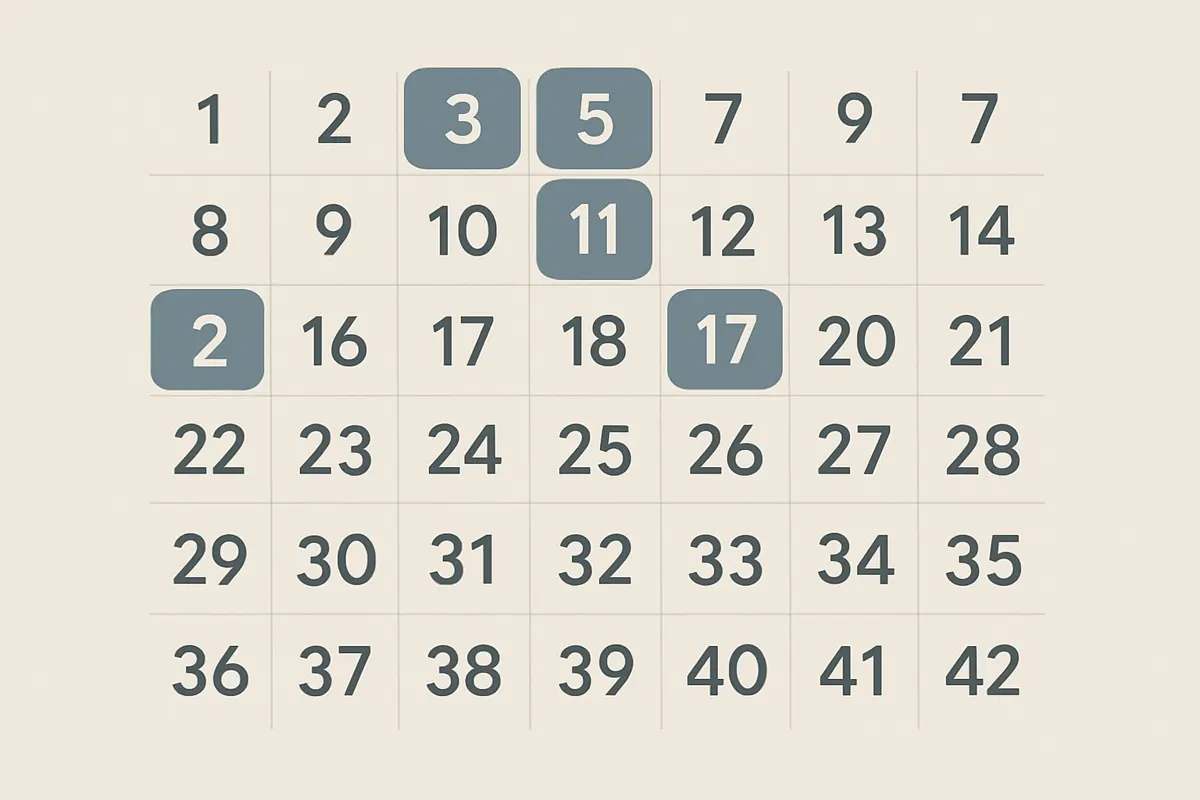
Is 121 Prime or Composite?
121 is a composite number. A prime number has exactly two positive divisors: 1 and itself. 121 has three divisors: 1, 11, and 121. Since it can be divided evenly by a number other than 1 and itself (specifically, 11), it is not prime.
The Factorization of 121
121 can be written as 11 × 11, or 11 squared. This means 11 is a factor of 121, and when you divide 121 by 11, you get 11 with no remainder. The full list of positive divisors for 121 is 1, 11, and 121.
Why Is 121 Not a Prime Number?
- A prime number has exactly two positive divisors: 1 and itself.
- 121 has three divisors: 1, 11, and 121.
- Because 11 is a divisor other than 1 and 121, 121 is composite, not prime.
Sharpen Your Prime-Spotting Skills
If you want to get faster at recognizing prime and composite numbers, try playing Prime 59. It's a race-the-clock game that helps you practice spotting primes like 121 (and knowing why it's not prime) in seconds.
Train your eye for primes the fun way - Prime 59 is a free, race-the-clock prime-spotting game.
Try Prime 59FAQ
Is 121 a prime number?
No, 121 is not a prime number. It is composite because it can be factored as 11 × 11.
What are the factors of 121?
The factors of 121 are 1, 11, and 121.
Why is 121 not a prime number?
121 is not prime because it has more than two positive divisors. Specifically, 11 is a divisor other than 1 and 121.
How can I get better at spotting prime numbers?
You can improve your ability to spot primes quickly by practicing with games like Prime 59, which challenges you to identify primes under time pressure.
What is the prime factorization of 121?
The prime factorization of 121 is 11 × 11.